More formats, greater impact: why variety works
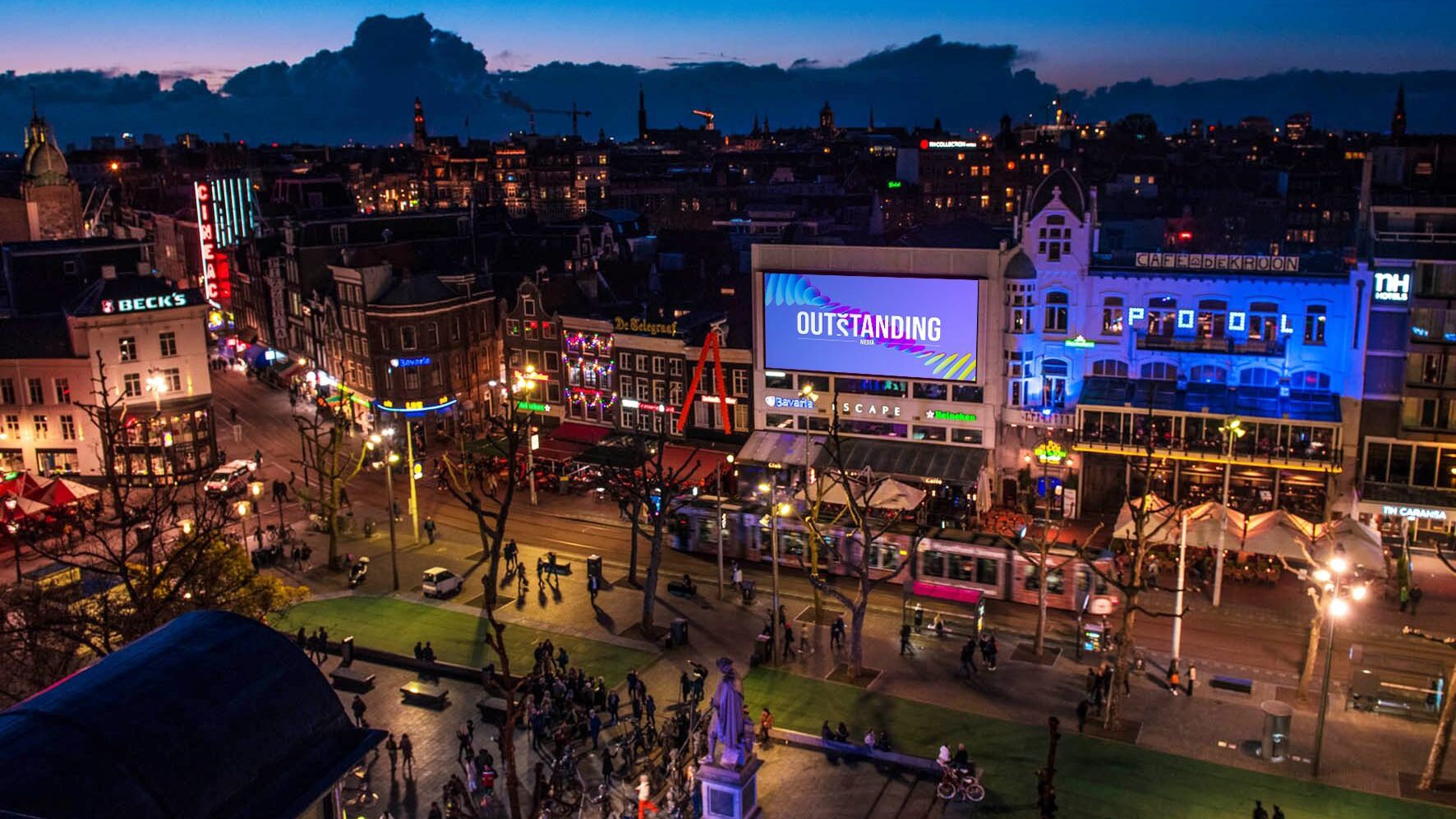
Out-of-home advertising isn’t just about visibility; it’s primarily about recognition, repetition, and impact. A campaign using a single format can be effective, but research shows that combining multiple (D)OOH formats can significantly boost the campaign’s impact.
Research by Dentsu Benelux / OMA – the Primal Awareness Study – shows that combining multiple (D)OOH formats has a greater impact than using a single format.
When multiple formats are used within a single campaign, the impact increases noticeably:
- 2 (D)OOH formats: +21% impact
- 3 (D)OOH formats: +29% impact
- 4 (D)OOH formats: +31% impact
This makes it clear that variety in outdoor advertising not only increases visibility, but also leads to more touchpoints, greater attention, and better recall.
Why multiple formats work better
Consumers move through different environments throughout the day. They drive, walk through shopping districts, wait for public transportation, or visit a supermarket, gas station, or city center.
By cleverly combining different (D)OOH formats, a campaign can better align with this natural viewing and movement behavior. For example, a bus shelter is seen at a different time and in a different context than a billboard, digital screen, or roadside object.
It is precisely this combination that ensures a message is noticed more often and at different times.
More touchpoints, more recall
Repetition plays a key role in advertising effectiveness. Not by simply showing the same image more often, but by ensuring the message appears in multiple relevant places.
When consumers encounter a campaign across different locations and formats, the message is more likely to stick. This boosts brand recognition and increases the likelihood that the brand or message will be recalled later on.
This makes (D)OOH not only a tool for reaching audiences, but also for brand building.
Each format has its own role
Not every format works the same way. A bus shelter often aligns well with the natural viewing habits of pedestrians, cyclists, and commuters. Billboards and larger formats, on the other hand, provide scale, impact, and visibility from a distance. Digital displays also offer flexibility, allowing campaigns to adapt to time, location, or context.
So the strength doesn't lie in any one specific format, but in the right combination.
For example, a smart media mix could consist of visibility along busy traffic routes, supplemented by digital bus shelters in urban areas and billboards near shopping centers or public transportation hubs. This creates a campaign that reaches the target audience multiple times and at different moments.
From reach to impact
For advertisers, this means that choosing (D)OOH involves more than just selecting individual locations. The key questions are: where does the target audience go, when is it possible to capture their attention, and which combination of formats best reinforces the message?
A campaign featuring multiple (D)OOH formats not only expands reach but also creates a richer campaign experience. And that’s exactly what makes the difference between being seen and being remembered.
Conclusion
More formats create a greater impact. By cleverly combining different (D)OOH formats within a single campaign, you can achieve a greater impact than with a single format.
For brands looking to build visibility, brand recognition, and brand recall, a diverse (D)OOH mix is therefore a strong strategic choice.
Source: Dentsu Benelux / OMA – Primal Awareness Study