How Much Does Outdoor Advertising Cost? Prices and Budgets Explained
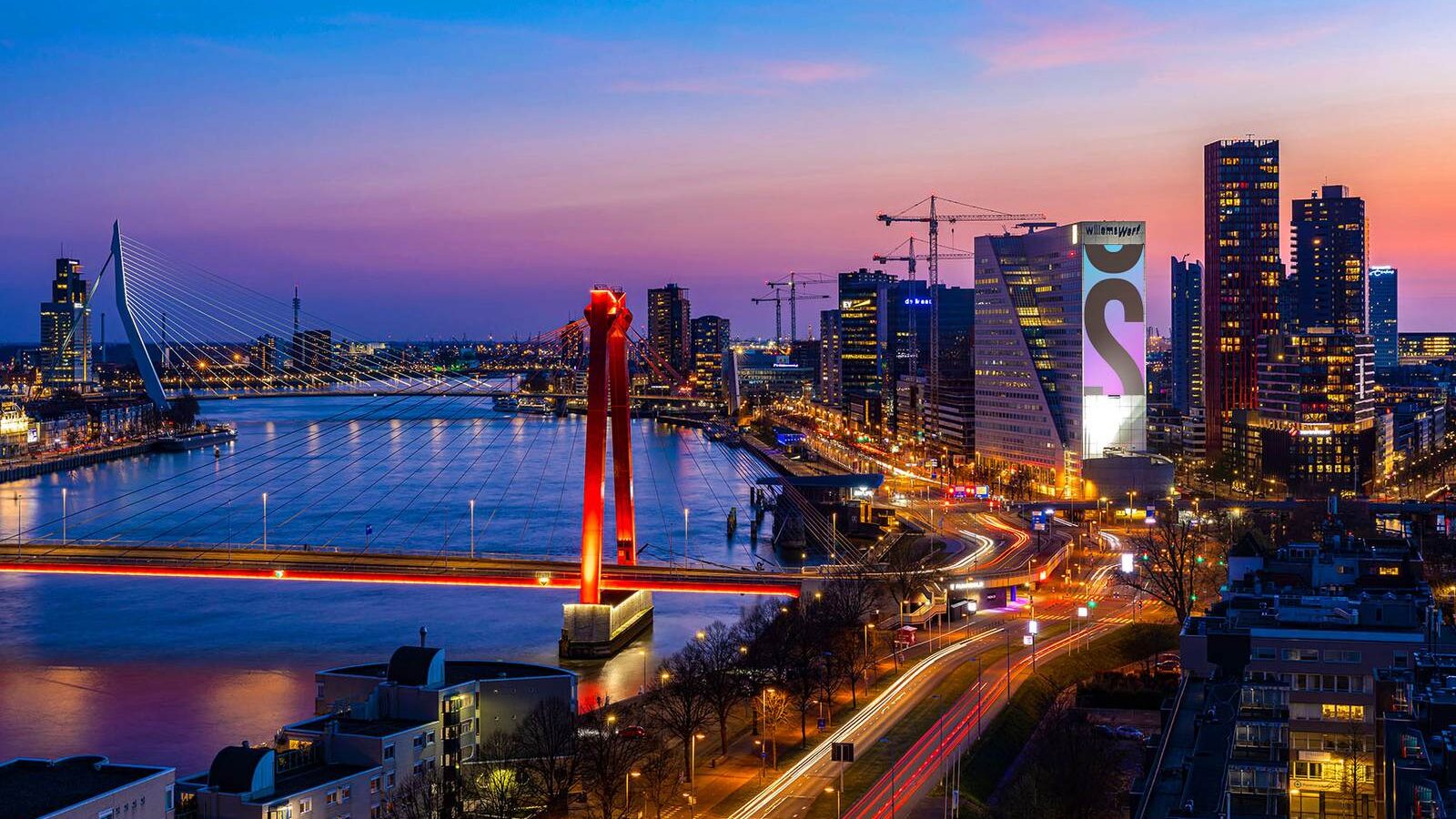

How much does outdoor advertising cost? The honest answer: that’s largely up to you. Outdoor advertising is possible on almost any budget. The cost of outdoor advertising depends mainly on how many people you want to reach, where, and when. As a rough guide: a local campaign in a city like Alkmaar can start at around €2,500. Nationwide visibility starts at around €25,000. Below, you’ll learn what factors influence the price, what you get for your money, and when we actually advise against running a campaign.
The real question: How many people do you want to reach?
We get asked “How much does outdoor advertising cost?” all the time. Of course, we could tell you how much a single City Light Panel costs, or an A0 billboard, or a week on a digital screen. But that’s not very helpful. The price depends entirely on the number of people who see it.
It sounds simple, but that’s how it works: the more people you want to reach, the more you pay. A tour of Alkmaar is very different from a week-long tour of the entire Netherlands. So the better question is: who do you want to reach, where, and how often?
What factors determine the cost of outdoor advertising?
We always consider the target audience first, and only then do we look at formats. Four choices together determine your budget:
- True. Local, regional, or national. And “local” in Amsterdam means something different than “local” in a village.
- Who. The more specific your target audience, the more precisely you can target your purchases.
- When and for how long. A whole week, or just during the times when your target audience is on the go.
- What size? An A0 poster, a City Light Panel ad, a digital billboard, or a construction site banner. Each size has its own price per impression and its own impact.
Here’s an example. Let’s say you want to reach a business audience. In that case, you could choose to target only the Randstad, since that’s where most business traffic is, and only during rush hour. That’s a very different cost compared to covering the entire Netherlands for a week. Can you reach your target audience on Monday mornings between 9 and 10 a.m.? If so, you’ll be visible for much longer with the same budget.
How much does outdoor advertising cost, roughly? Three sample budgets
Just to give you an idea: here's roughly what you can expect. All amounts are exclusive of VAT.
| Budget | What can you do with it? |
|---|---|
| Starting at €2,500 | A local campaign in a city like Alkmaar. For example, a week of City Light Panels or two weeks of A0 posters in the neighborhoods where your customers live. |
| €5,000 to €15,000 | A large city or a region. More areas, more weeks, or a mix of analog and digital. A city like Amsterdam falls into this category. |
| Starting at €25,000 | Nationwide visibility. For example, a week of City Light Panels throughout the Netherlands, or digital billboards along the highways. With multiple formats and weeks, you’ll quickly exceed €50,000. |
Why the price per City Light Panel isn't very meaningful
Each City Light Panel has its own score. A City Light Panel at a busy intersection in Utrecht generates far more contacts than one on the outskirts of a village. Two City Light Panels with the same price can therefore have very different values.
That’s why we use the cost per thousand contacts, or CPM. But you have to be careful here, too: some use “passersby,” while others use ROTS or VAC. You can read more about this in our article “How Is the Reach of Outdoor Advertising Measured?”
And then there’s the impact. A billboard in the middle of the city doesn’t have a massive reach, but it certainly stands out. That also factors into the price.
From Affordable to Expensive: A Comparison of Sizes
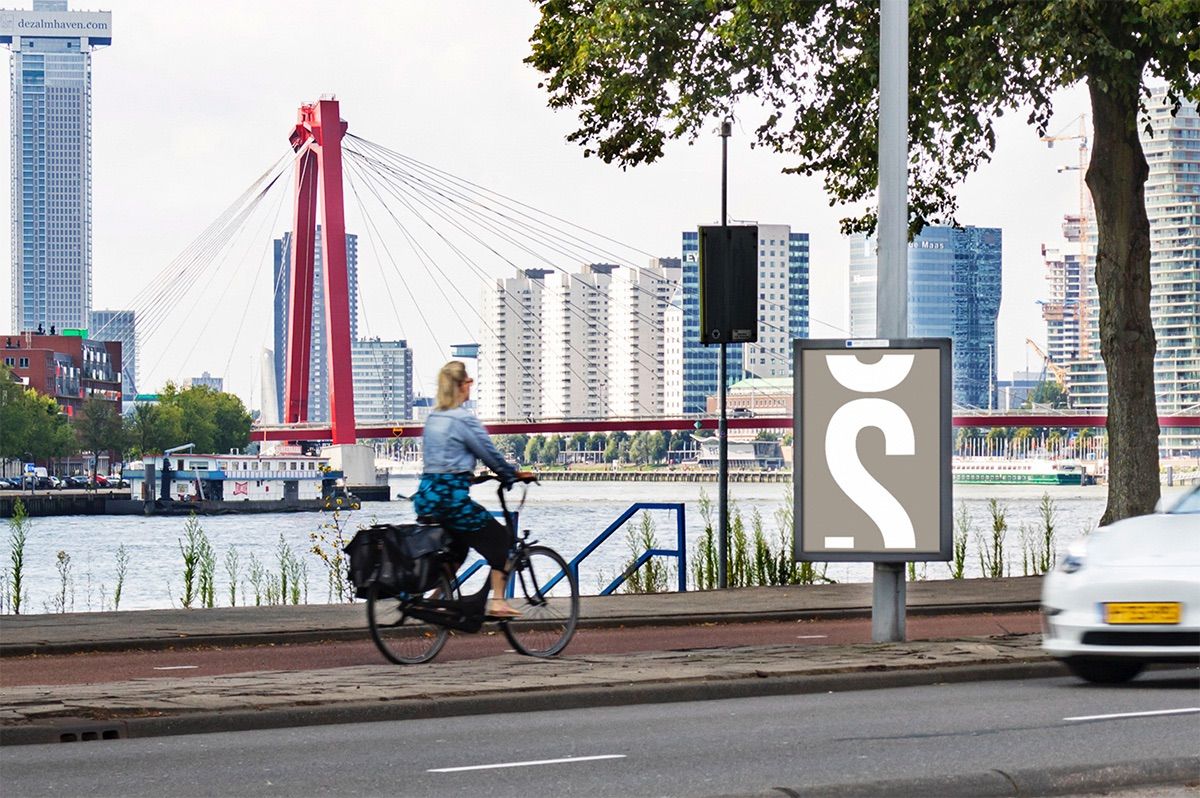
Calculated per contact, the order is roughly as follows, from least expensive to most expensive:
- A0 posters. They’re low-cost, you can put up a lot of them, and they have good visibility. However, the poster isn’t displayed behind glass and isn’t illuminated, so you’re more dependent on the weather. During the winter months, the visibility of an A0 poster remains roughly the same as in the summer, while illuminated signs actually gain a significant advantage during that time. Read more in our article about outdoor advertising in the winter.
- City Light Panels. Behind glass and illuminated. With “City Light Panels,” you can quickly build a wide reach with a high contact frequency. The workhorse of outdoor advertising.
- Highway billboards. Analog and digital. A lot of contacts in a short amount of time. But not everyone drives on the highway, so to achieve broad national coverage, you combine billboards with other formats.
- Digital City Light Panels. In the city's busiest areas: train stations, shopping districts, and squares.
- Retail media. Screens inside and outside supermarkets and stores, right near the point of purchase.
Scaffolding banners and other special items are not included in this list. With those, you’re mainly paying for the impact.
With all digital formats, you choose which days and times you'll be visible.
Analog or digital: how does the price differ?
With analog outdoor advertising, you reach the most people per euro, even when you factor in printing costs. Digital advertising isn't more expensive in terms of investment, but it is more expensive per contact.
Analog: wide range, but requires printing
With analog advertising, your poster stays up for the entire campaign. This means the posters have to be printed and put up, so you’ll need to submit your design earlier than you would for digital advertising.
There are two ways to have a City Light Panel poster printed. With 4/0, only the front is printed. With 4/3, the back is also printed. There’s a reason for this: City Light Panels are backlit. If the back isn’t printed, the ad will look a bit washed-out at night. And you want your ad to look sharp.
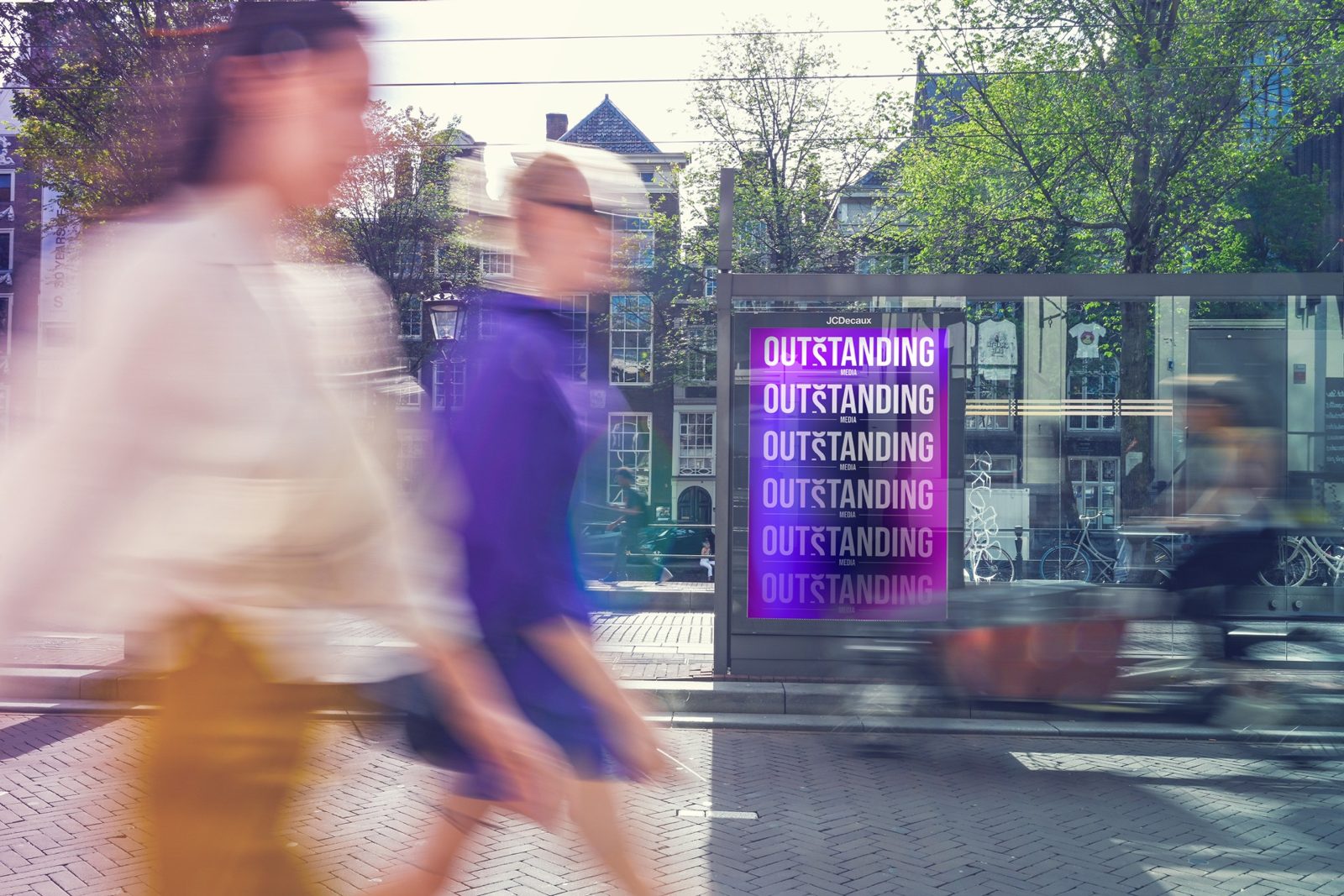
Analog is the most effective medium for reaching a wide audience. This is true nationwide, but also when you want to reach a specific neighborhood or ZIP code. A City Light Panel in a residential neighborhood in Apeldoorn or Amersfoort is seen mainly by the people who live there.
Digital: Get Started Quickly, Share Freely
The big advantage of digital media is that you can launch your campaign as soon as your ad is ready. No need to print anything or put anything up. A commercial usually lasts 6 or 10 seconds.
You do share the screen with other advertisers. We don't think that's a big deal. No one stands in front of a screen for an hour. Anyone who walks by and sees your ad has made a connection, whether there are one or ten other brands running on that screen.
Digital screens are almost always located in busy areas: train stations, shopping districts, and supermarkets. That makes sense, since installing a screen in a residential neighborhood is still too expensive. But supermarkets also attract people from other ZIP codes. So if you want to reach a specific neighborhood, digital advertising is often not the best choice.
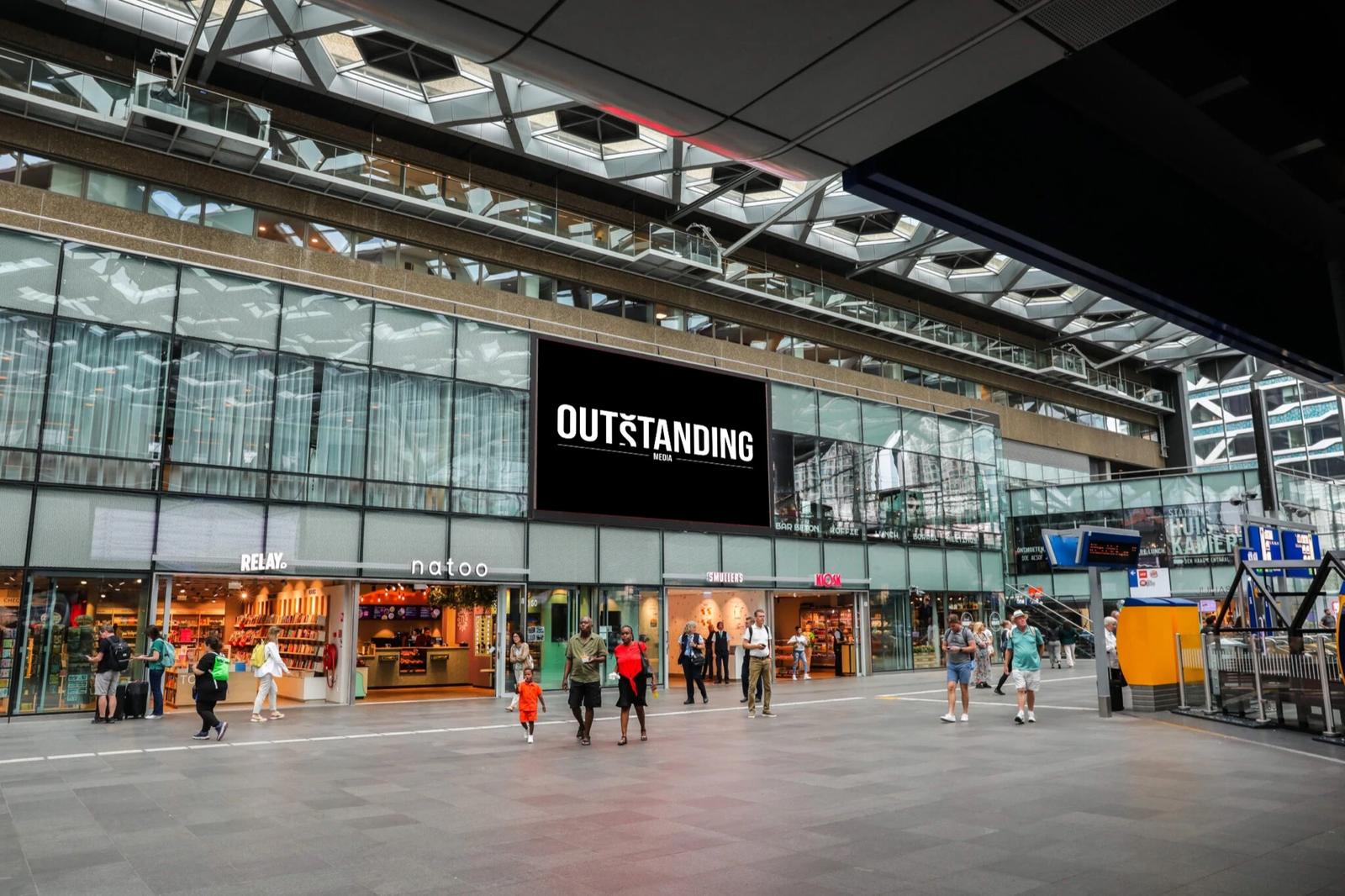
Of course, you can be visible on a digital screen all day long. But since you pay per contact, the costs can quickly add up. Choosing wisely when to be visible can save you a lot of money.
Printed Materials: Less Than You Think
Everyone makes a big deal out of print materials. That’s understandable, because it feels like an extra cost on top of your media budget. But it’s not as bad as it seems. For most campaigns, between 1 and 5 percent of the budget goes toward print materials. The larger the campaign, the smaller that percentage. For a nationwide campaign with a budget of 100,000, it’s only about 1 percent.
And since analog printing produces more contacts than digital printing, it’s often still more cost-effective to include printed materials.
Price trends throughout the year: When should you book?
Outdoor advertising follows the rhythm of the year. The more advertisers want to be visible at the same time, the higher the price:
- January is the most affordable month of the year. February is still below average.
- March through May are already busy, with peaks around Easter, King's Day, and Mother's Day.
- Prices drop in June, and July and August are the most affordable months after January.
- September is one of the busiest months, especially around week 36, when the school year begins.
- Prices drop slightly in October. In November and December, they rise to the highest levels of the year, with Black Friday and Christmas marking the peaks. Weeks 50 and 51 are often the first to sell out.
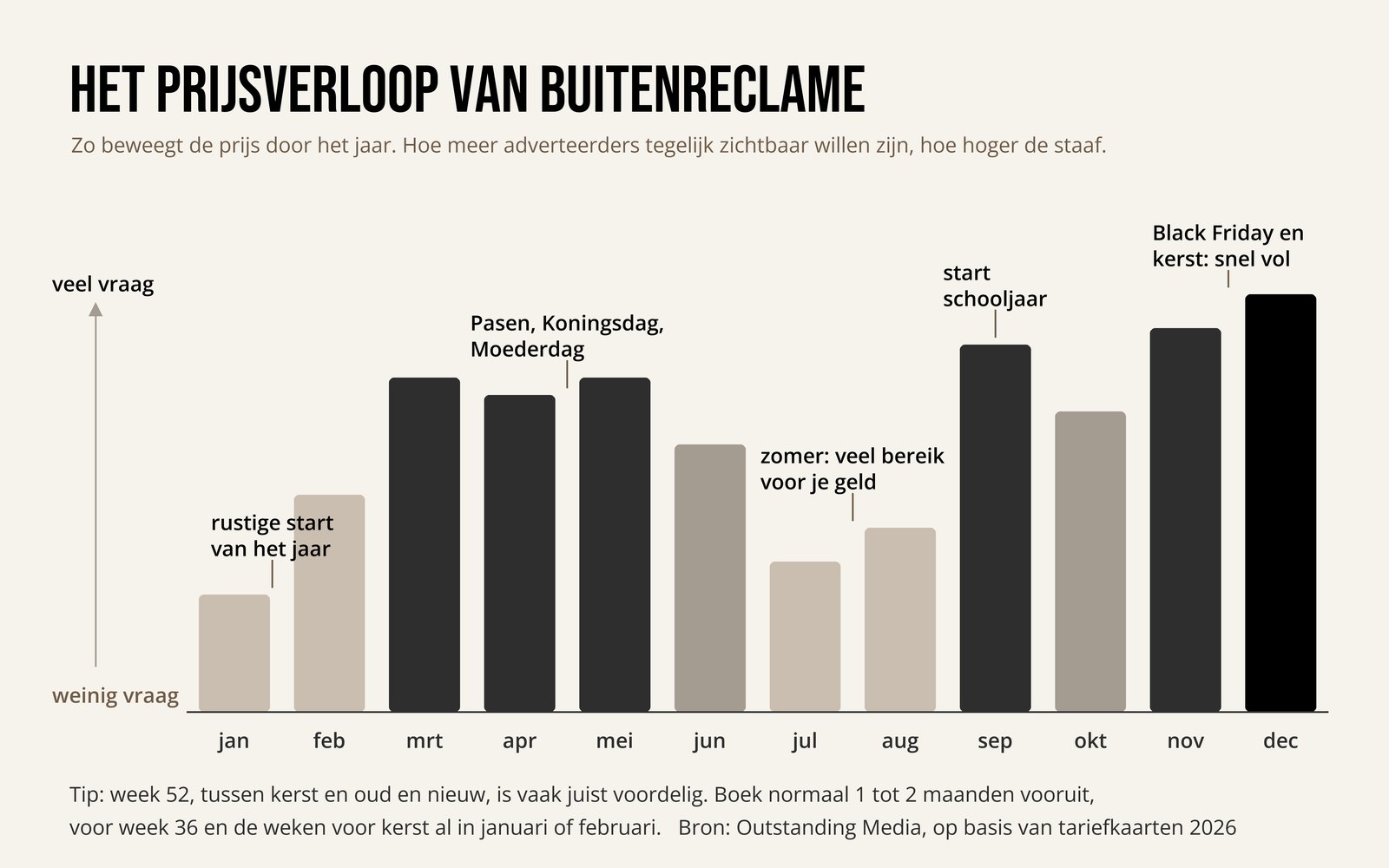
Here's a tip: Week 52, between Christmas and New Year's, is often a good time to save money.
And don't underestimate the summer. Many advertisers think everyone is on vacation and stay away. But prices are falling faster than the number of people on the streets. Reach is still excellent in the summer, and you actually pay less per contact.
Normally, book one to two months in advance. If you want to be featured in week 36 or in the weeks leading up to Christmas, make the arrangements as early as January or February.
When We Do Not Recommend Outdoor Advertising
Ideally, we’d never turn down an outdoor advertising campaign. But sometimes it’s more honest to say no. For example, if someone wants to reach all of Amsterdam for €1,000. Or if the target audience is so specific that you’d hardly ever reach them with outdoor advertising. If we can only reach your target audience half as often as needed, you can’t expect 2,000 sign-ups.
You also hear that you can get a week’s worth of exposure on a digital billboard for €500. That’s certainly possible. But then you might only be visible once every five hours. You won’t even notice it. And then the conclusion is: “Outdoor advertising doesn’t work. I didn’t even see my campaign.”
That’s a waste of your money, and a waste for outdoor advertising. We’re in this business out of passion. We want your campaign to succeed so that you’ll choose us again next time. That’s why we link every budget to a realistic goal.
How much does " Outstanding Media" cost?
We don’t work on an hourly basis. You tell us your budget, and we’ll show you what you can achieve with it. That includes consulting, procurement, and support. If something comes up during the campaign that requires our attention, we’ll take care of it, without adding any new hours to the budget.
Together, we have over 25 years of experience in outdoor advertising, and we source media on a daily basis. That’s why we know exactly what things should cost. As an advertiser, you usually only see the rate card, which is often inflated. We know where you can get better deals, and, more importantly, better results. We select the locations and times that truly deliver reach within your target audience, and we avoid the less effective ones.
We look beyond a single campaign. Our goal is for outdoor advertising to work for you, to take all the work off your hands, and to ensure that you come back to us.
Curious to see what your outdoor advertising budget can achieve? Schedule a free strategy session.
Frequently Asked Questions
How much does a City Light Panel cost?
That varies by City Light Panel, by city, and by time period. A City Light Panel in a busy location generates far more contacts than one on the outskirts of a village. That’s why the price per City Light Panel isn’t very meaningful. Instead, look at the price per thousand contacts and at how many people in your target audience you reach with it.
What is the minimum budget for outdoor advertising?
Outdoor advertising is possible on almost any budget. For an effective local campaign in a city like Alkmaar, you can expect to pay around €2,500, excluding VAT. Nationwide visibility starts at around €25,000. More important than the amount is that it aligns with your goal.
Is digital outdoor advertising more expensive than traditional outdoor advertising?
Generally speaking, yes, per contact. With analog outdoor advertising, you reach the most people per euro, even when you include printed materials. Digital advertising has other advantages: you can get started quickly without printed materials, and you choose the hours during which you’re visible.
When is outdoor advertising the cheapest?
In January, followed by July and August. Week 52, between Christmas and New Year's Eve, is also often a good time to book. September and the weeks leading up to Christmas, on the other hand, are busy and fill up quickly.
Do the prices include sales tax?
No. Prices for outdoor advertising almost always exclude VAT. The amounts listed in this article also exclude VAT.